OTHER WRITING
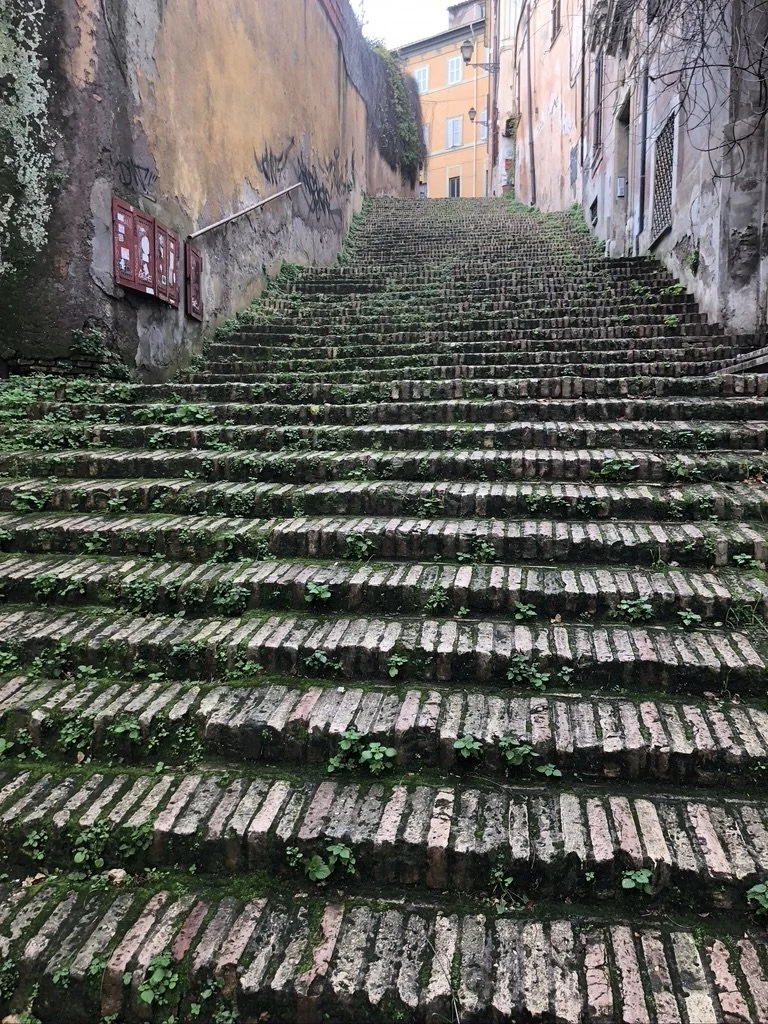
A staircase is never just that.
It leads us up and down, of course. But it also reminds us of where we have been and promises to take us somewhere else. It wears away even as it endures. It is material but also symbolic, evocative, and enigmatic.
My writing explores the paradoxes of the world around us, how places and spaces come to mean different things as time and our imaginations work upon them. What is stable and what can we count on? What wisdom can we find in our changing landscapes? As we shape our environment, intentionally or not, how does it shape us?
I am interested in these questions in the realm of personal experience, shared public histories, and global politics, and I explore them in various kinds of writing—largely non-fiction but not only.
See my News and Events page for more, and read about my current interests below.
For a full list of my publications, scroll down. And be sure to visit my Books page too.
WORKS in PROGRESS
A Great Fissure: Memory, Identity, and the Sicilian Landscape
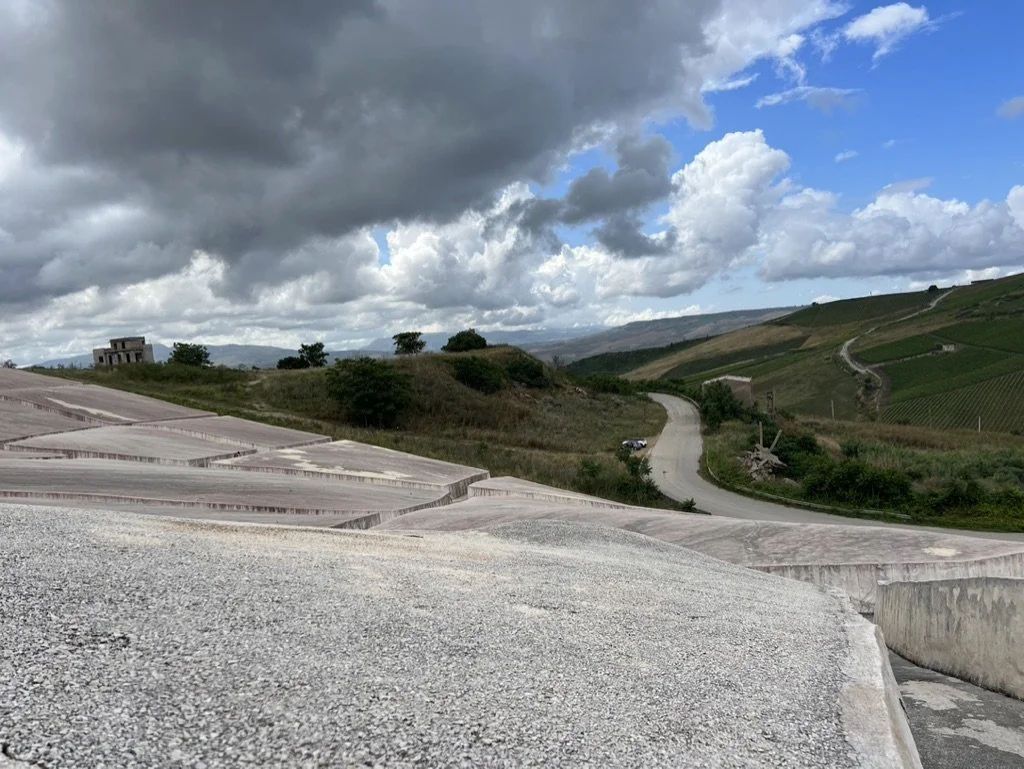
Alberto Burri’s Grande Cretto, Gibellina, Sicily, June 2023
Alberto Burri’s Grande Cretto (“Great Fissure”) covers a hillside in western Sicily where the town of Gibellina once stood. In 1968, a massive earthquake struck the area and destroyed Gibellina, displacing its 6,400 residents. Burri, a major figure in the mid-century Arte Povera movement, was invited to contribute a work for the replacement “art town” of Nuova (New) Gibellina but declined, preferring to intervene on Gibellina itself. His Cretto, completed posthumously in 2015, is a massive work of land art set atop the remains of the village, an abstracted, three-dimensional labyrinth of concrete that shelters and reveals its original form.
Gibellina was also the birthplace of my great-grandfather, and my first visit came in 2023, just weeks after my father, his grandson, had died. In an essay that also launches a series of studies of the Sicilian landscape, I am writing about my encounter with Burri’s work in the context of generational memory, searching, and loss. The Cretto is piece of land art at once permanent and fragile; it is a simulacrum, a map, and a tomb, a place both saturated and empty; it proffers an invitation to retrace footsteps, as investigation or meditation. Like mourning itself, the Cretto is at once vast and tightly enclosed, even claustrophobic.
Other essays in this series will explore sites in Palermo and Gela, modes of reconstruction and repair, and a meditation on journeys.
Meaningful Heritage

The Herring Run Archaeology Project in Baltimore, led by Lisa Kraus and Jason Shellenhamer, 2016.
The protection and preservation of cultural heritage is very much in the news, as we watch thousands of years of human history eroded and destroyed by acts of war and terrorism, by natural and human-caused environmental stress, by the impact of globalization, and through short-sighted political folly.
Preservation" is complicated. Who decides what gets preserved and how? How should the benefits of modern life be balanced with the desire to preserve the past? What are the best ways to share the benefits that come from preservation and to distribute the costs and risks, and how should we balance local concerns with global ones? And when we choose not to save something, what should take its place?
I have long been interested in the role museums play in such questions, but I am increasingly focused on spaces outside of museums, from archaeological sites to historic cityscapes to sites of daily living—and on the various, multi-taloned threats to history and memory in the United States today.
Currently, I am writing an essay on monuments as warnings, sites of memory and forgetting in Andalucia, and more. Follow me on my News and Events page.
Adaptation and Translation
I’m moving in new directions with some literary and dramaturgic adaptations of my new book and a related translation too. More information to follow soon.
PUBLICATIONS
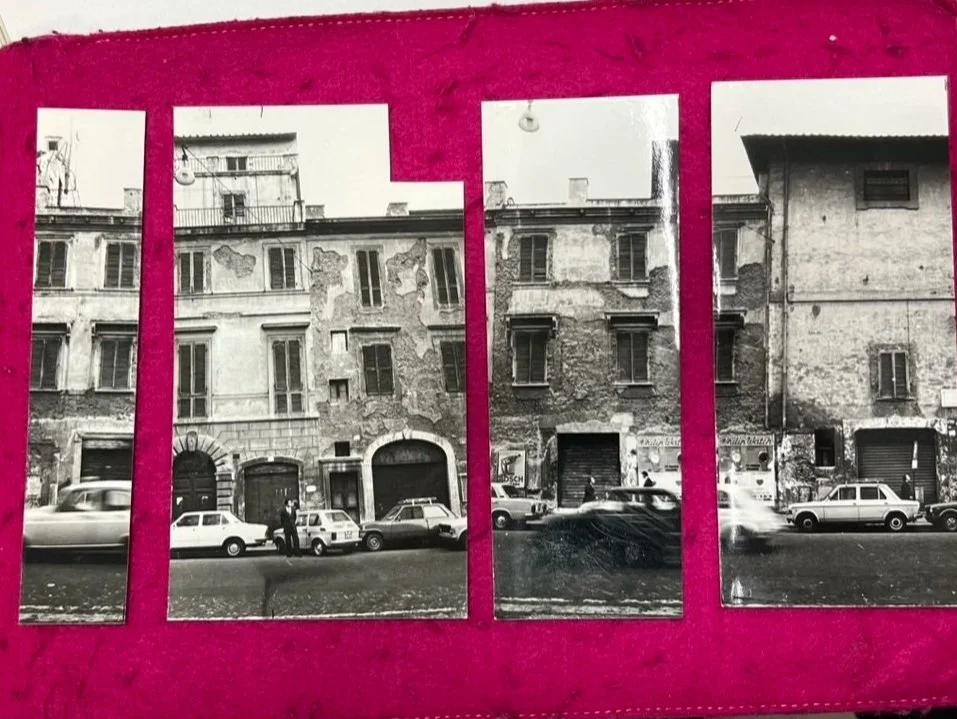
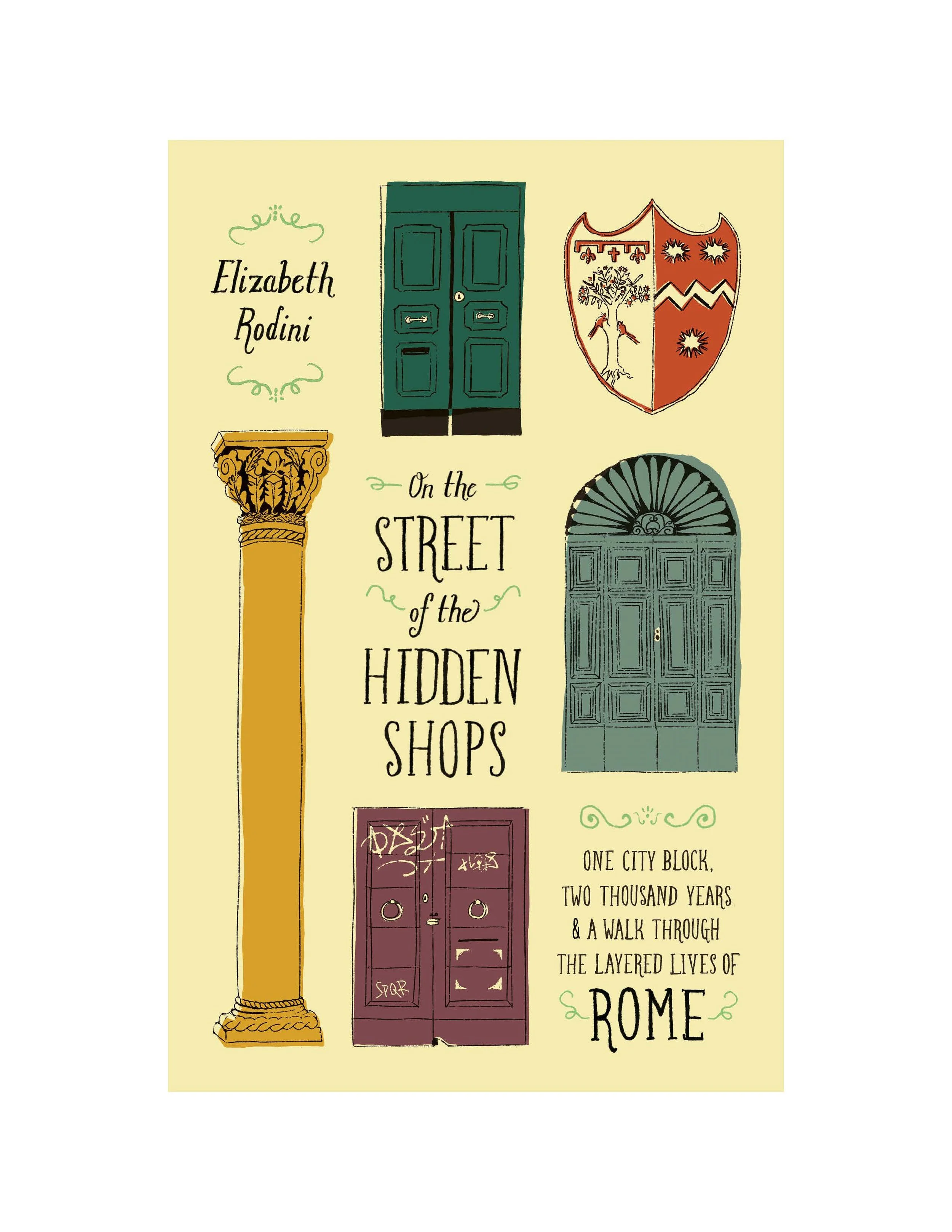
On the Street of the Hidden Shops: One City Block, Two Thousand Years, and a Walk Through the Layered Lives of Rome, University of Chicago Press, 2026 (forthcoming).
Delve into Rome’s lost history through the stories of a single block
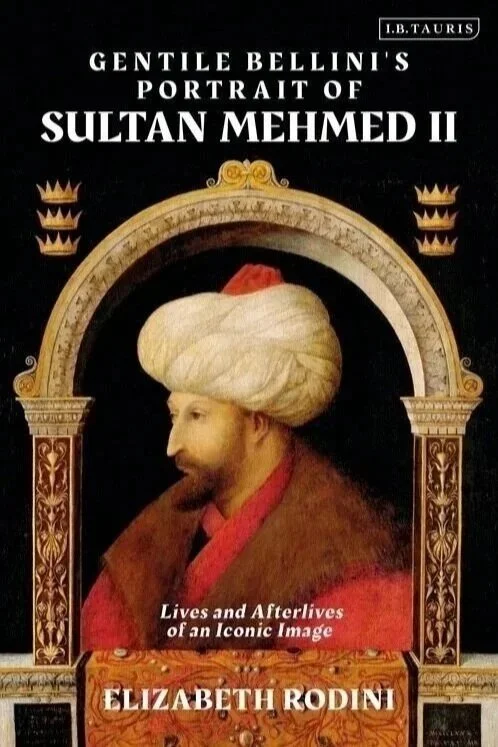
Gentile Bellini’s Portrait of Sultan Mehmed II: Lives and Afterlives of an Iconic Image, I.B. Tauris /Bloomsbury, 2020.
“ … evokes both a memoir and a mystery novel … “ (L. Markey)
Available through the publisher and on Amazon
HERITAGE WRITING
“A Sense of Place: Hidden Stories of the Johns Hopkins University Homewood Campus,” ICOM News, Special Issue: Museums and Cultural Landscapes, 2015 (vol. 68, no. 3): 12–13.
“Preserving and Perpetuating Memory at the Musée Nissim de Camondo in Paris,” Museum History Journal 7: 1 (January, 2014): 36-54.
ON MOBILITY, COLLECTING, and DISPLAY
“Containing Collections: Bernardin di Redaldi’s Inventory (1527) and the Social Meaning of Islamic Metalwork in Early Modern Venice,” Islamic Art and Architecture in Italy: Between Tradition and Innovation, ed. Silvia Armando (at press).
“Imitation as a Mercantile Strategy: The Case of Damascene Ware,” Typical Venice? The Art of Commodities, 13th-16th Centuries, ed. Ella Beaucamp and Philippe Cordez, Brepols Publishers, 2020, pp. 107-119.
“Mobile Things: On the Origins and Meanings of Levantine Objects in Early Modern Venice,” Art History 41 (April, 2018): 246-65.
“Mapping the Provenance of Museum Objects,” Archive, Issue 2, Fall 2012.
VENICE: HISTORY and ART
“The Politics of Marriage in Carpaccio’s St. Ursula Cycle,”Early Modern Women: An Interdisciplinary Journal 8 (October, 2013): 85-117. Winner, Best Article Prize, 2013.
“The Sultan’s True Face? Gentile Bellini, Mehmet II, and the Value of Verisimilitude,” in The Turk and Islam in the Western Eye, 1450–1750: Visual Imagery before Orientalism, ed. James Harper, Ashgate, 2011, pp. 21-40.
“Mapping Narrative at the Church of San Marco: A Study in Visual Storying,”Word & Image 14 (no. 4, 1998): 387–96.
“Describing Narrative in Gentile Bellini’s Procession in Piazza San Marco,” Art History 21 (March, 1998): 26-44.
ON EXHIBITIONS and MUSEUMS
Smarthistory: 6-part series on art museums, their history, politics, and practicalities:
“Artists in and against the Museum,” May 25, 2019
“Looking at Art Museums,” May 15, 2019
“Art Museums and (Art) Objects,” May 15, 2019
"The Changing Social Functions of Art Museums," June 18, 2018
"A Brief History of the Art Museum," April 27, 2018
“Museums and Politics: The Louvre, Paris,”December 19, 2017
See also Smarthistory videos on the facade of San Marco (May 2, 2020) and Carpaccio’s St. Ursula cycle (in production).
“Exhibition Situations: Allyson Purpura in Conversation with Elizabeth Rodini,” Art Journal Open, September 10, 2018.
“Exhibition Situations: Risham Majeed in Conversation with Elizabeth Rodini,” Art Journal Open, February 12, 2018.
“Digging Collections: Lessons from Mark Dion’s ‘An Archaeology of Knowledge,” in An Archaeology of Knowledge: A Permanent Art Installation for the Brody Learning Commons. JHU: The Sheridan Libraries & University Museums, 2012, pp. 35–40.
"The Ivory Tower and the Crystal Palace: Universities, Museums, and the Potential of Public Art History,” caa.reviews, Nov. 27, 2007.
CATALOGUES and EXHIBITION PUBLICATIONS
Printed Sculpture/Sculpted Prints, The Baltimore Museum of Art, 2007 (with students from Johns Hopkins University).
The City Real and Ideal, The Baltimore Museum of Art, 2006.
Paper Museums: The Reproductive Print in Europe, 1500–1800, with Rebecca Zorach. Chicago: David and Alfred Smart Museum of Art, 2005.
A Well-Fashioned Image: Clothing and Costume in European Art, 1500–1850, with Elissa B. Weaver. Chicago: David and Alfred Smart Museum of Art, 2002.
“Signs in Stone: The Symbolic Value of Jewelry in Renaissance and Baroque Europe,” La cultura ceñida: Las joyas en la pintura valenciana siglos xv a xviii. Valencia: Centre Valencià de Cultura Mediterrànea, 2000.
“The Language of Stones," Art Institute of Chicago Museum Studies 25 (no. 2, 2000): 17–28.
OTHER
I am also the author of book reviews and encyclopedia entries; production and copy editor of museum catalogues; reviewer for journal and book manuscripts; and served caa.reviews for three years as an exhibition field editor and four years on the editorial board.